10 Practical Ways to Save More Money Every Month
Why Monthly Savings are the Bedrock of Financial Health
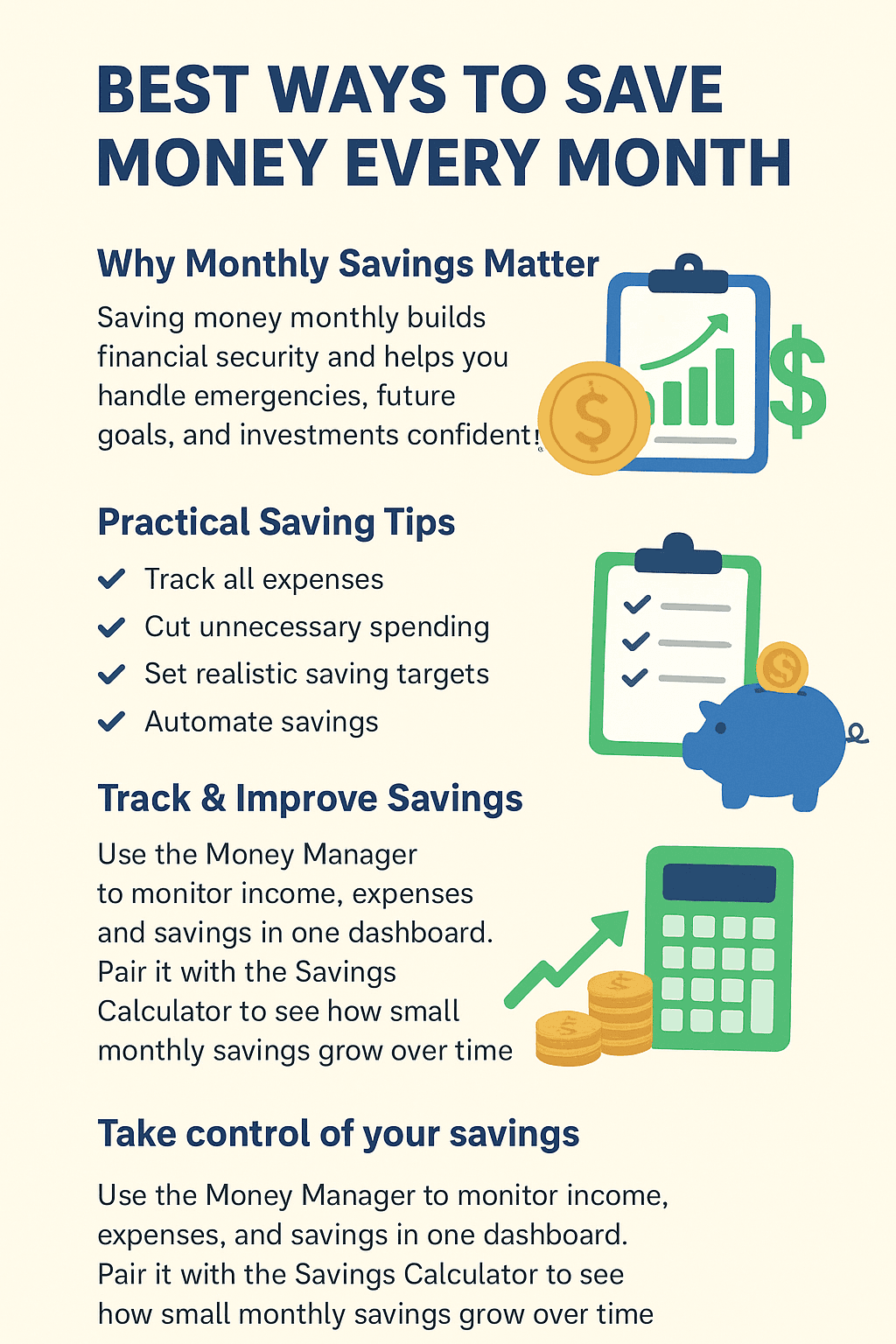
Saving money consistently every month is the single most important habit for building long-term wealth and financial security. It's not about making huge, drastic cuts to your lifestyle; it's about making small, smart choices that add up over time. A healthy savings habit allows you to handle unexpected emergencies without stress, confidently plan for major life goals like buying a home or funding your child's education, and build an investment portfolio that works for you. Think of monthly savings as paying your future self first.
💡 10 Practical Saving Tips You Can Start Today
-
Create a Realistic Budget (and Stick to It!): The first step to saving is knowing where your money goes. Use our Budget Planner to list all your income sources and fixed/variable expenses. Assign a limit for each category. This isn't about restriction; it's about mindful spending.
-
Automate Your Savings with the "Pay Yourself First" Method: The moment your salary hits your account, automatically transfer a predetermined amount (e.g., 10-20%) to a separate savings or investment account. This ensures you save before you have a chance to spend.
-
Track Every Single Expense: For one month, track every single rupee you spend. You'll be surprised to find "money leaks"—small, frequent purchases like daily chai, snacks, or subscription services you don't use. Our Money Manager is perfect for this.
-
Implement the 30-Day Rule for Big Purchases: Want to buy that new gadget or trendy apparel? Wait for 30 days. If you still want it after a month, and it fits your budget, go for it. Often, the impulse will fade, saving you money.
-
Review and Renegotiate Your Recurring Bills: Take a look at your phone bill, internet plan, and insurance premiums. Are you on the best plan? A quick call to customer service or a comparison with competitors can often lead to significant monthly savings.
-
Master the Art of Meal Prep: Eating out and ordering in are major budget killers. Dedicate a few hours on the weekend to plan and prep your meals for the week. This not only saves money but is also healthier.
-
Embrace DIY and Second-Hand Shopping: Before buying new, consider if you can fix it yourself or find a high-quality second-hand alternative. This is especially true for furniture, electronics, and even cars.
-
Set Specific, Measurable Savings Goals: Instead of a vague goal like "save more," set a clear target: "Save ₹50,000 for a vacation in 10 months." Use our Goals Calculator to break down your goal into manageable monthly contributions.
-
Use a High-Yield Savings Account: Don't let your savings sit idle in a standard savings account. Move your emergency fund and short-term savings to a high-yield savings account to earn better interest.
-
Plan Your Purchases and Avoid Impulse Buys: Always make a shopping list before going to the grocery store. For online shopping, add items to your cart and wait 24 hours before checking out. This simple delay can prevent many unnecessary purchases.
🚀 How Finance Toolkit Supercharges Your Savings
Our suite of tools is designed to work together to help you save effectively:
- Track & Improve: Use the Money Manager to get a clear, visual breakdown of your income and expenses. Identify your top spending categories and find areas to cut back.
- Plan Your Future: Pair it with the SIP Calculator or Lumpsum Calculator to see how the money you save can grow exponentially when invested wisely.
- Stay Focused: Our platform is clean, simple, and distraction-free, helping you focus on what matters most—your financial goals.
Saving money isn't about deprivation; it's about empowerment. By taking control of your spending, you give yourself the freedom to build the life you want.
Take the first step today 👉 https://financetoolkit.online