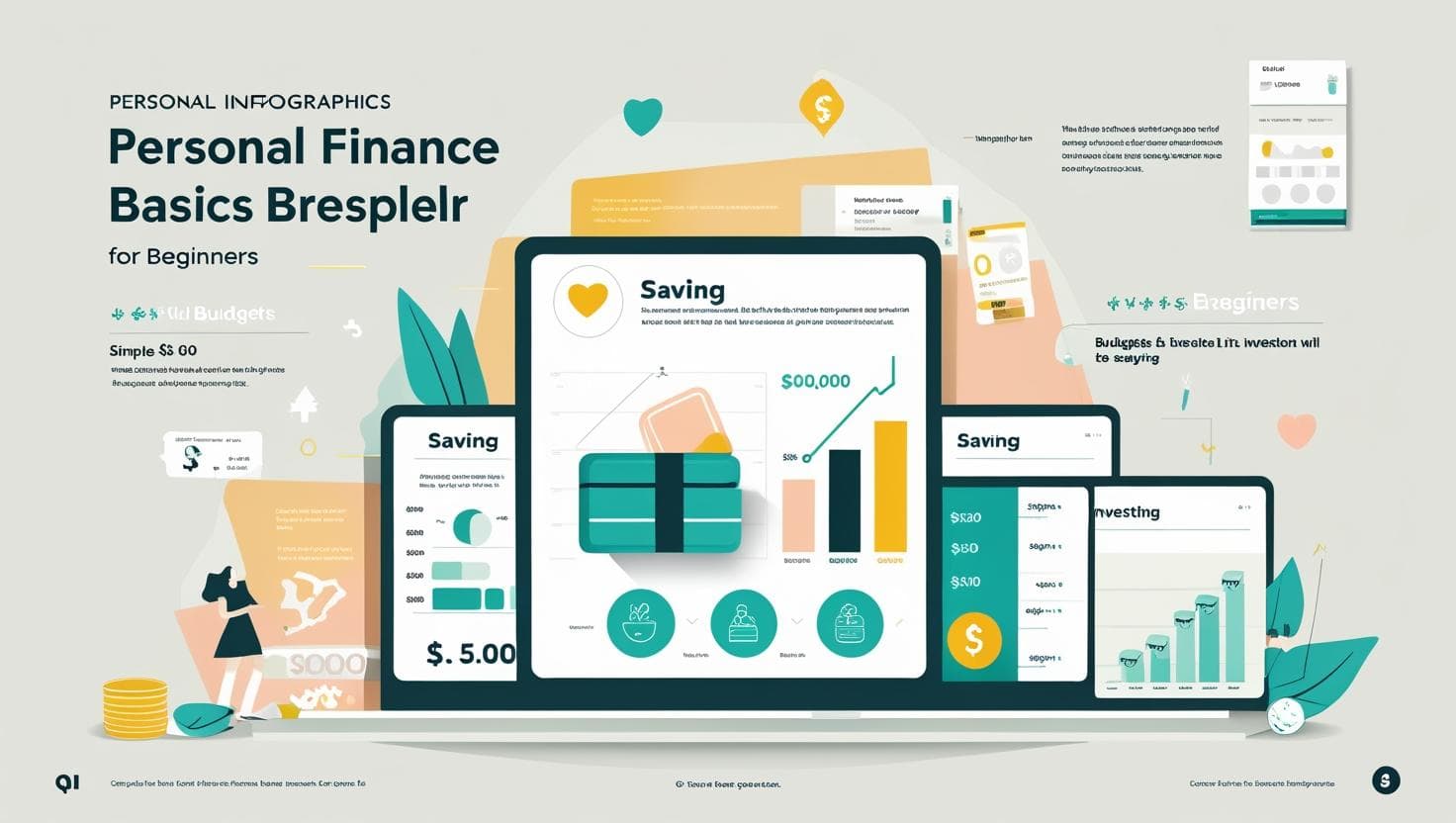
Personal Finance Basics: A Beginner’s Guide to Managing Money
The 5 Pillars of Personal Finance
Personal finance can seem complicated, but it boils down to five simple, interconnected pillars. Mastering them will give you control over your financial life.
-
Budgeting (The Foundation): This is the practice of tracking your income and expenses. A budget is simply a plan for your money. It tells you where your money is going and helps you make conscious spending decisions. Without a budget, you're flying blind.
- How to start: Use our Budget Planner Tool to apply the 50/30/20 rule: 50% on needs, 30% on wants, and 20% on savings.
-
Saving (Your Safety Net): Saving is the act of setting aside money for future use. The most crucial part of saving is building an emergency fund—a pool of money (typically 3-6 months of living expenses) to cover unexpected events like a job loss or medical emergency. This fund prevents you from going into debt when life happens.
- How to start: Automate a transfer to a separate savings account the day you get your salary.
-
Investing (Making Your Money Work for You): Saving alone is not enough, because inflation erodes the value of your money over time. Investing is putting your money into assets (like stocks, mutual funds, or real estate) that have the potential to grow in value and provide returns that beat inflation.
- How to start: For beginners, a Systematic Investment Plan (SIP) in an index fund is a great way to start investing in the stock market with as little as ₹500. Use our SIP Calculator to see how it can grow.
-
Debt Management (Using Leverage Wisely): Not all debt is bad. A home loan is a "good" debt that helps you acquire an asset. Credit card debt is a "bad" debt with high interest that can destroy wealth. The key is to use debt wisely, borrow only what you need, and have a clear plan to repay it.
- How to start: Before taking any loan, use our Loan EMI Calculator to understand the total cost and ensure the EMI fits your budget.
-
Insurance (Protecting Your Wealth): Insurance is your defense against catastrophic events that could wipe out your savings. It's a crucial part of any financial plan. The two most important types of insurance are:
- Health Insurance: To cover hospitalization and medical expenses.
- Term Life Insurance: To provide for your family in case of your untimely demise.
Mastering these five pillars will put you on a clear path to financial security and freedom. Start with budgeting today!